


Educational guidance only — PelvicCore Men's Wellness does not promise or guarantee outcomes. Consult a qualified clinician for your own care.

+62 21 584 7721 [email protected] Monday to Friday, 9:00 AM – 6:00 PM (WIB)
Hands resting on the open front edge of a wooden card drawer on a work table in a dim reading room
Start here

PelvicCore Men's Wellness — Jakarta

Pelvic floor exercises for men, filed one routine at a time

Educational guides on pelvic floor exercises for men, Kegel routines, posture, breathing and everyday self-care habits — written for readers in Indonesia, in plain English, with no promises of outcomes.

Kegel basics What the pelvic floor muscles are and how a Kegel routine is built
Daily routine Short sessions fitted into a normal working week
Posture and breathing How core stability and relaxed breathing sit beside the exercises
Self-care habits Sleep, sitting, hydration and the ordinary parts of a routine

Reading the drawer

How to use these guides

Every page on this site works the same way: a short explanation of what the exercise or habit involves, a description of how a session is usually organised, and a note on what to check before you continue. Nothing here is a schedule you must follow, and nothing here replaces a conversation with a qualified professional about your own situation.

If you are new to pelvic floor training, start with the anatomy page and read it once, slowly. The muscles involved are small and easy to misidentify, and most beginners squeeze the wrong ones for the first few attempts. Understanding where the pelvic floor sits, and how it relates to your breathing, makes the first practice session considerably easier to judge. From there, the routine builder turns the same material into a weekly shape you can actually keep.

Readers who already have a routine in place, or who are dealing with a specific question about posture or daily habits, can move directly to the pages listed further down. Each guide stands on its own, and cross-references point to the neighbouring topic when a subject needs more room than one page allows.

Where a pelvic floor routine actually happens

A routine is furniture, not a performance. Here is the ordinary shape of one.

A man seated at a plain desk, seen from behind, pausing mid-breath at dusk
A posture break at the desk: feet flat, spine tall, one long exhale before returning to the screen.
A man seated on a wooden chair, hands on knees, chest lifted during a breathing exercise
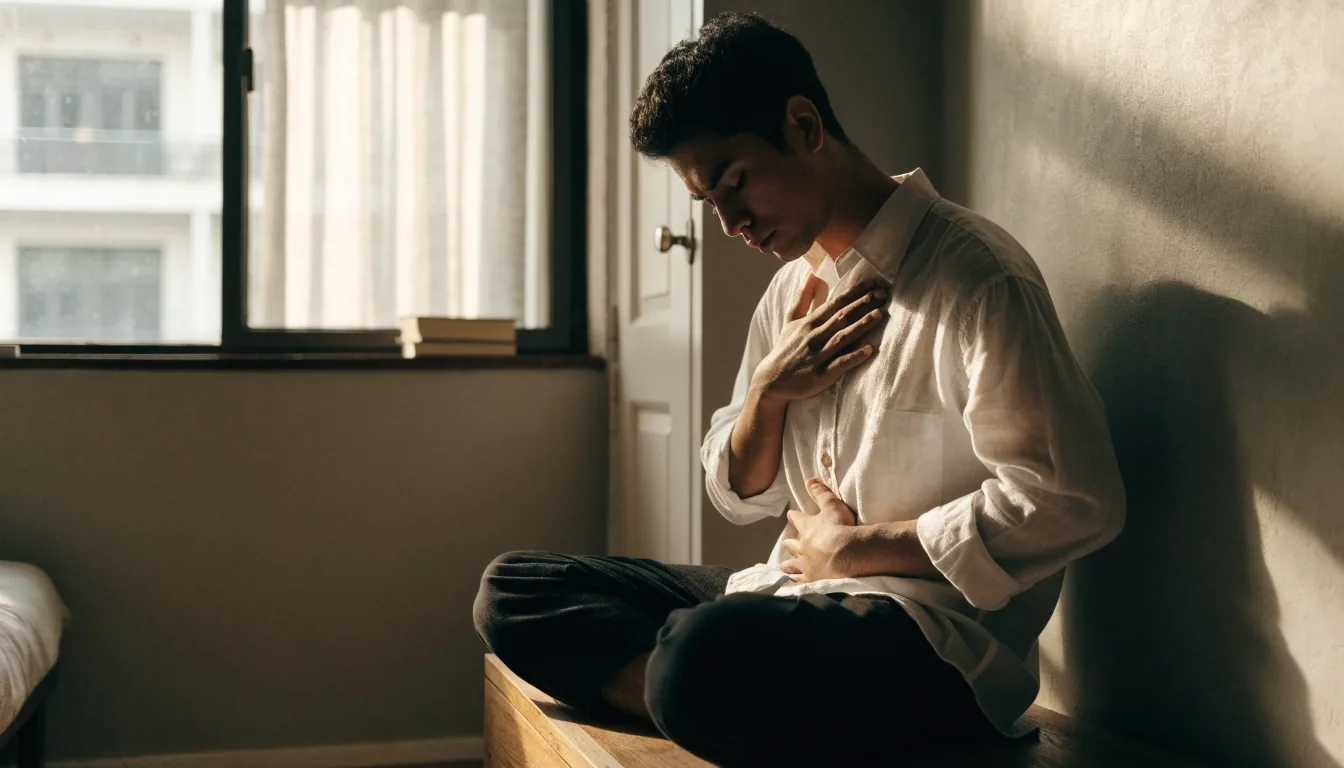
A seated breath: ribs widen, belly stays soft, the floor of the body relaxes downward.
A rolled exercise mat on a wooden floor with morning light at the edge of the frame
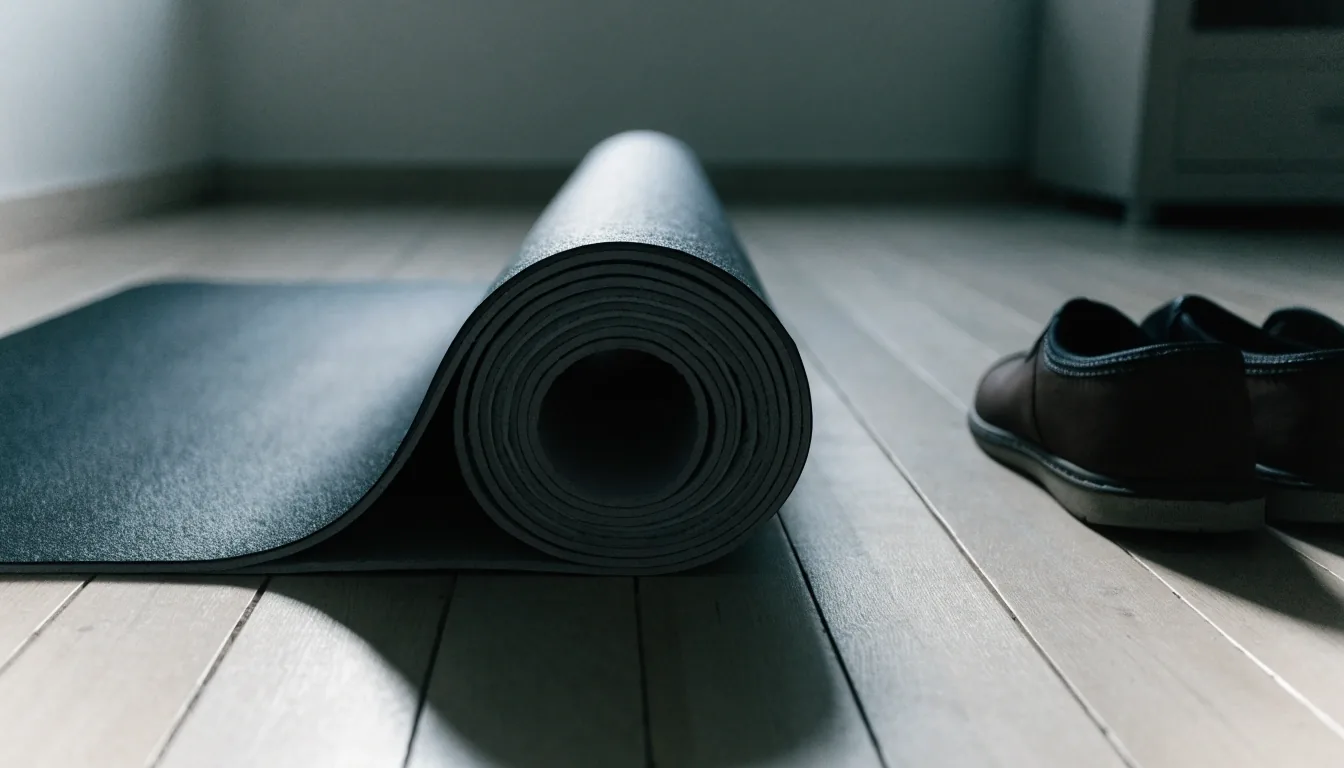
The floor mat at home: a low angle, a rolled edge, and enough space to lie flat without rushing.
A warm-lit doorway seen from the end of a quiet corridor in a traditional wellness house
A quiet doorway in Jakarta: the room where a professional looks at posture and movement up close.
A hand resting on an open notebook at the edge of a worn wooden table under warm light
A worn table and an open notebook: the gesture of noting how a session felt, without scoring it.

Choosing a starting point

Four pages, four different questions

Most visitors arrive with one of four questions in mind. Read the short description under each heading and follow the one that matches what you are actually trying to work out — the guides overlap, but each starts from a different place.

I do not know where the muscles are

Start with the anatomy guide. It describes the pelvic floor, explains how it sits inside the body, and walks through a slow first attempt at identifying the contraction without straining the surrounding muscles.

Open Kegel Basics for Men


I know the exercise but never keep it up

The routine builder takes the same exercises and arranges them across a week — short sets, realistic gaps, and a way of noticing when the pattern is slipping before the whole thing is abandoned.

Open the Daily Routine Builder

My back and shoulders complain before the exercises do

Posture, breathing and core stability sit underneath every pelvic floor routine. This guide explains how a tall spine and a relaxed breath change the way the same exercises feel, and where a desk-bound day gets in the way.

Open Posture, Breathing & Core

The rest of the day is the problem

Sitting, sleep, hydration and stress all feed into how a routine feels week to week. The self-care guide covers the unglamorous parts — the ones that decide whether the exercises get done at all.

Open Everyday Self-Care Habits
A reading room at night with shelves, a single chair and one lamp seen from across the room

What this site does not do

Educational material, and only that

This site publishes general information about pelvic floor exercises, Kegel routines, posture, breathing and daily habits for men. It does not assess your situation, it does not tell you what is right for your body, and it does not promise any particular outcome from following a routine.

If something you read raises a question about your own health, take that question to a qualified professional who can look at you properly. The guides here are written to help you understand the vocabulary and the practical shape of a routine — they are a starting point for that conversation, not a substitute for it.

Read more about how pages are prepared and reviewed on About Our Editorial Approach.

The habit chain behind every routine

A pelvic floor routine rarely fails at the exercise. It fails in the hour before and the hour after. These are the practical steps that most readers end up working on, in roughly the order they matter.

Set a fixed time, not a fixed mood

Attach the session to something that already happens every day — after a shower, before the commute, after the last meal. Waiting for the right moment is how routines disappear.

Keep the first weeks short

A handful of slow, well-judged repetitions is easier to repeat tomorrow than a long session that leaves you stiff and unwilling to sit down again.

Notice the surrounding muscles

If the buttocks, thighs or stomach are doing the work, the pelvic floor is not. Learning to relax everything else is half the exercise, and it takes longer than the squeeze itself.

Review the week, not the day

Some days will be missed. Look at how many sessions happened across seven days rather than judging a single bad evening, and adjust the plan to the week you actually have.

A plain wooden chair with a folded towel on the seat and a small stopwatch on the table beside it

What the guides contain

Anatomy, routines, posture and the unglamorous habits

Each guide follows the same editorial shape. First, the anatomy or the habit in plain language — where the muscles sit, what the movement looks like, why posture and breathing matter. Then, how a session is usually organised: how long, how often, how many repetitions, and how to tell whether the effort is landing in the right place.

Finally, each page closes with what to check before you continue — the small markers that suggest the routine is progressing, and the signals that mean it is time to slow down and ask someone qualified. That closing note is the reason the guides exist in this shape: pelvic floor training is simple to describe but easy to get subtly wrong, and knowing when to stop is part of the practice.

Questions readers ask before starting

Do I need equipment to follow these guides?

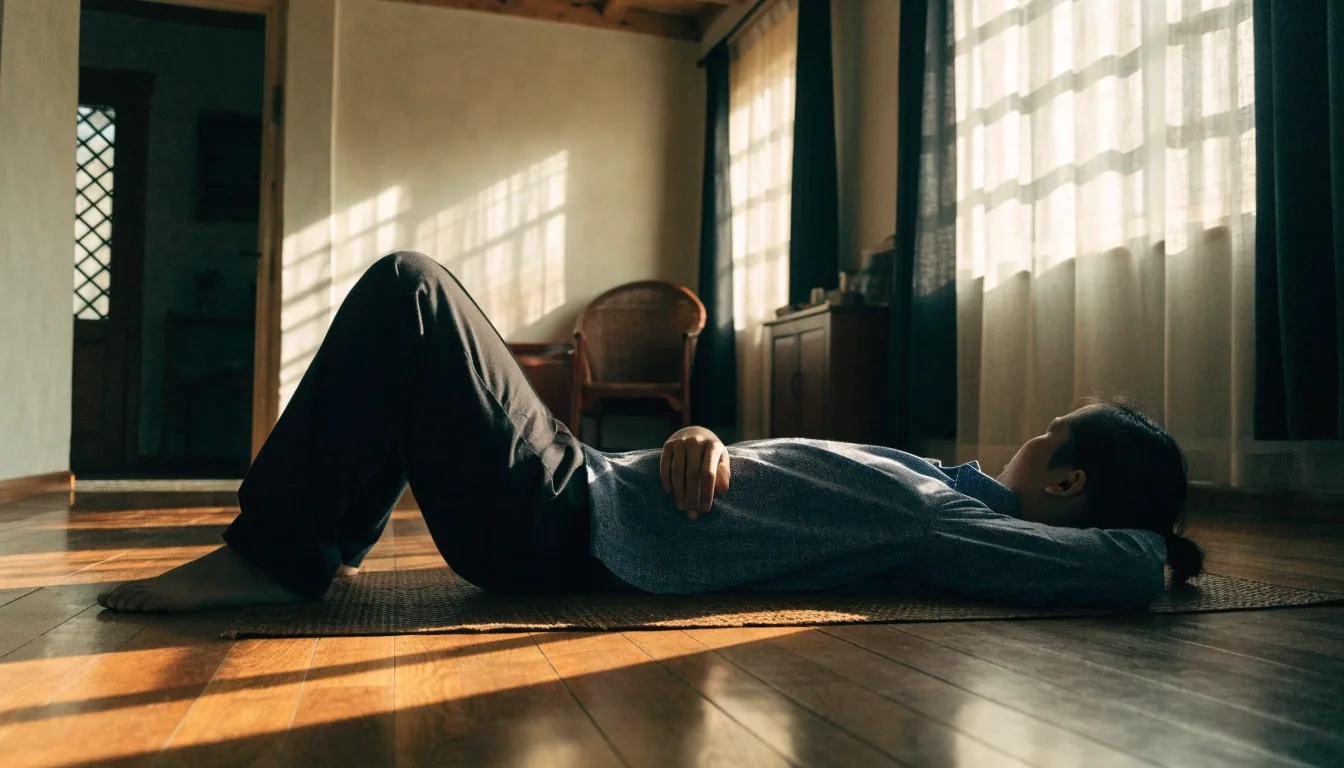
No. A chair, a floor and a few quiet minutes cover most of what is described here. A mat helps if you plan to lie down, and a timer on your phone is useful for keeping sessions short, but neither is required to begin.

How often should a routine be practised?

The guides describe a common shape — several short sessions spread across a week rather than one long effort — but the right frequency depends on how your body responds. Start smaller than you think you need to, and let the routine grow once the habit is holding.

Is the information here relevant outside Indonesia?

The exercises themselves are general, and the pages are written in English for readers in Indonesia. The practical advice about sitting, commuting and working hours reflects a Jakarta day, but the anatomy and the routine structure apply anywhere.

What if I have a question the guides do not answer?

Write to us and describe what you were reading. We can point you to the page that covers the subject, or explain why the guides stop where they do. We cannot answer questions about your own situation — those belong with a qualified professional who can look at you in person.

Send a note about the guides

Use this form to ask where a subject is covered, to point out something that reads unclearly, or to tell us which guide you were reading. We read every message during office hours. We cannot advise on your personal situation — please take those questions to a qualified professional.

Office hours

Monday to Friday
9:00 AM – 6:00 PM (WIB)

What to include

The page you were reading, and the question it left open.

We use your message only to reply. See the Privacy Policy for details.