
How to read this page
A weekly schedule, assembled from small pieces
Most men in Jakarta do not need a long session. They need three short things that happen on the same days, in the same order, at roughly the same time. This page shows how to build that shape from four kinds of block, then hands you a week to copy.
Everything here is educational. There is no promised result, and nothing on this page replaces advice from a qualified professional.
- Contractions
- Short squeezes and releases of the pelvic floor, held only a few seconds each, done sitting or lying down.
- Posture breaks
- Two-minute resets away from the desk: stand, unround the shoulders, let the ribs settle over the hips, walk a few steps.
- Breathing
- Slow nasal breathing with the belly and ribs moving, not the chest. Five rounds is a full set.
- Low-impact movement
- A walk, a short mat sequence, or slow hip and spine mobility — movement that lets you keep breathing evenly.
See also: Kegel Basics for Men for how a single contraction is performed, and Posture, Breathing & Core for the mechanics behind each block.
Four blocks, and how long each one really takes
Time is the honest constraint. A pelvic floor contraction set does not need ten minutes; a posture break does not need a mat. Build the week around the real durations below and the schedule stops collapsing on busy days.
Contraction set
Eight to ten slow squeezes with a full release between each. Quality over count — if the release disappears, stop the set.
Breathing round
Five slow breaths, roughly four counts in and six counts out, seated with the back supported and the jaw loose.
Desk posture break
Stand, roll the shoulders back and down, lengthen the spine, then walk to the end of the room and back.
Mat or walk block
A slow mat sequence or a steady walk. Keep the pace low enough that you can still breathe through the nose without strain.
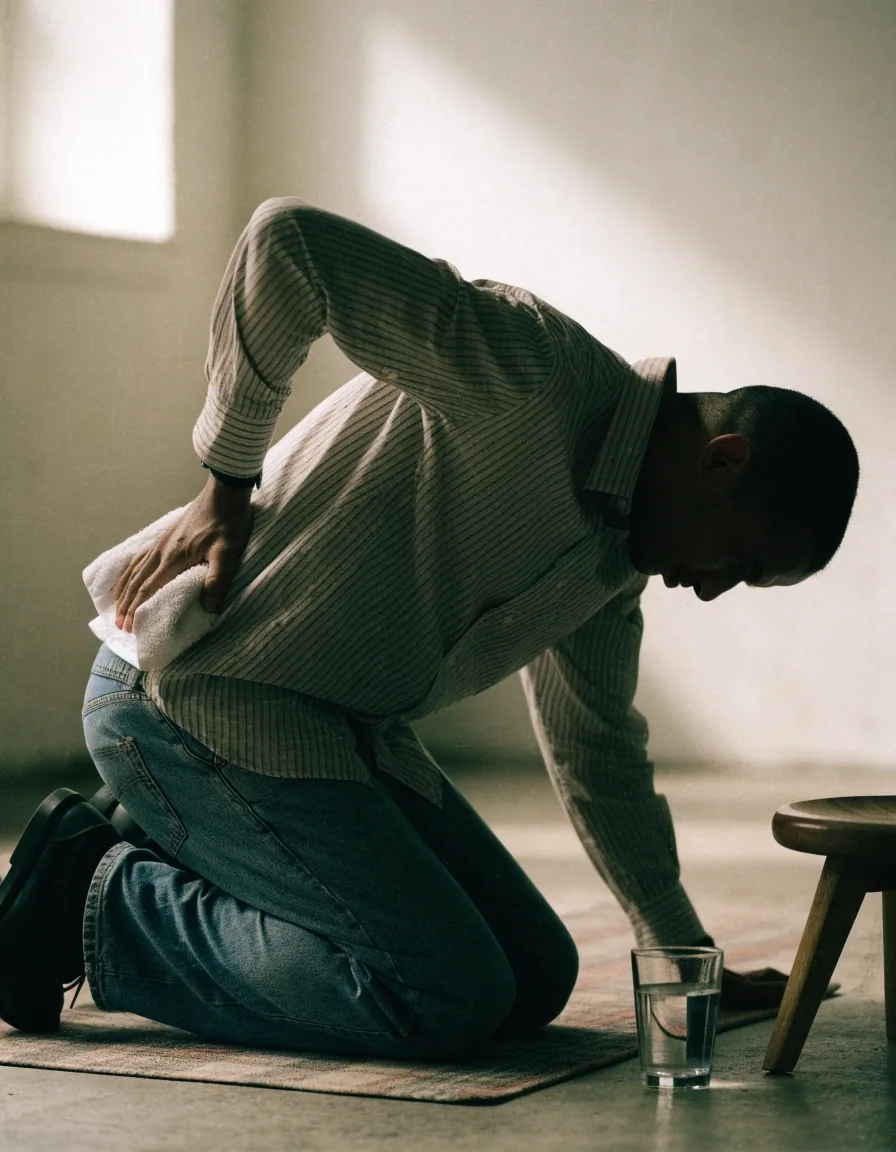
Build the routine from what already happens in your day — the chair you sit in, the walk to lunch, the minutes before sleep. Then add nothing else for two weeks and see which block keeps getting skipped.
A weekly wellness schedule for men, one day at a time
This is a starting shape, not a rule set. Copy it as written for two weeks, then move the blocks to the times you actually keep.
Monday and Thursday
Morning: contraction set in a chair, then a breathing round. Afternoon: one desk posture break. Evening: mat or walk block.
Longest day of the week
Tuesday and Friday
Morning: contraction set. Midday: posture break, twice if the desk day runs long. Evening: breathing round before sleep.
No movement block needed
Wednesday and Saturday
Morning: breathing round, five slow rounds. Midday: posture break. Evening: mat block at an easy pace, or a longer walk.
Breathing leads the day
Sunday
One contraction set, done slowly and unhurried, and nothing else. The light day is part of the plan, not a failure of it.
Rest counts
See also: Everyday Self-Care Habits for the sleep, hydration and sitting patterns that decide whether a schedule survives.

How to build your own version of this schedule
The week above works because every block is tied to a moment that already exists. When you rebuild it for your own days, keep that principle and change only the timing.
-
First
Anchor one block to a fixed habit
The contraction set is easiest to attach: after the morning shower, while the coffee brews, or in the car before you go in. Pick one anchor and keep it for the full two weeks.
-
Second
Set the posture break by the clock, not by feel
Long sitting is the part most people underestimate. Choose two or three times that match your desk day and stand at those times regardless of how the back feels.
-
Third
Keep breathing last in the day
Five slow rounds before sleep are easier to keep than five at noon, and they close the day instead of interrupting it.
-
Fourth
Give the movement block a lower bar
Fifteen minutes of slow movement twice a week is easier to hold than an hour once. If the block keeps getting skipped, shorten it before you move it.
Keeping a daily pelvic floor routine going
Schedules fail for ordinary reasons. These are the ones that come up most, with the adjustment that usually settles them.
The squeeze starts to feel rushed
Drop the count from ten to six and slow the release. A rushed set is usually a signal to do less, not more.
Posture breaks get forgotten on meeting days
Move one break to the moment a call ends, and keep the other on the clock. Two anchors beat three intentions.
Breathing rounds turn into a chore
Shorten to three breaths and keep the slot. The habit is the point; the count can grow later.
A whole week gets missed
Restart on the light day, not the heaviest one. Starting small makes the second week more likely than the first.
The movement block feels like training
Lower the pace until you can breathe through the nose the whole way. Easy movement is the one that fits beside the other blocks.
Discomfort during a contraction set
Stop the set and let the muscles rest. If it returns, set the routine aside and speak with a qualified professional before continuing.
Where the routine happens in a Jakarta week
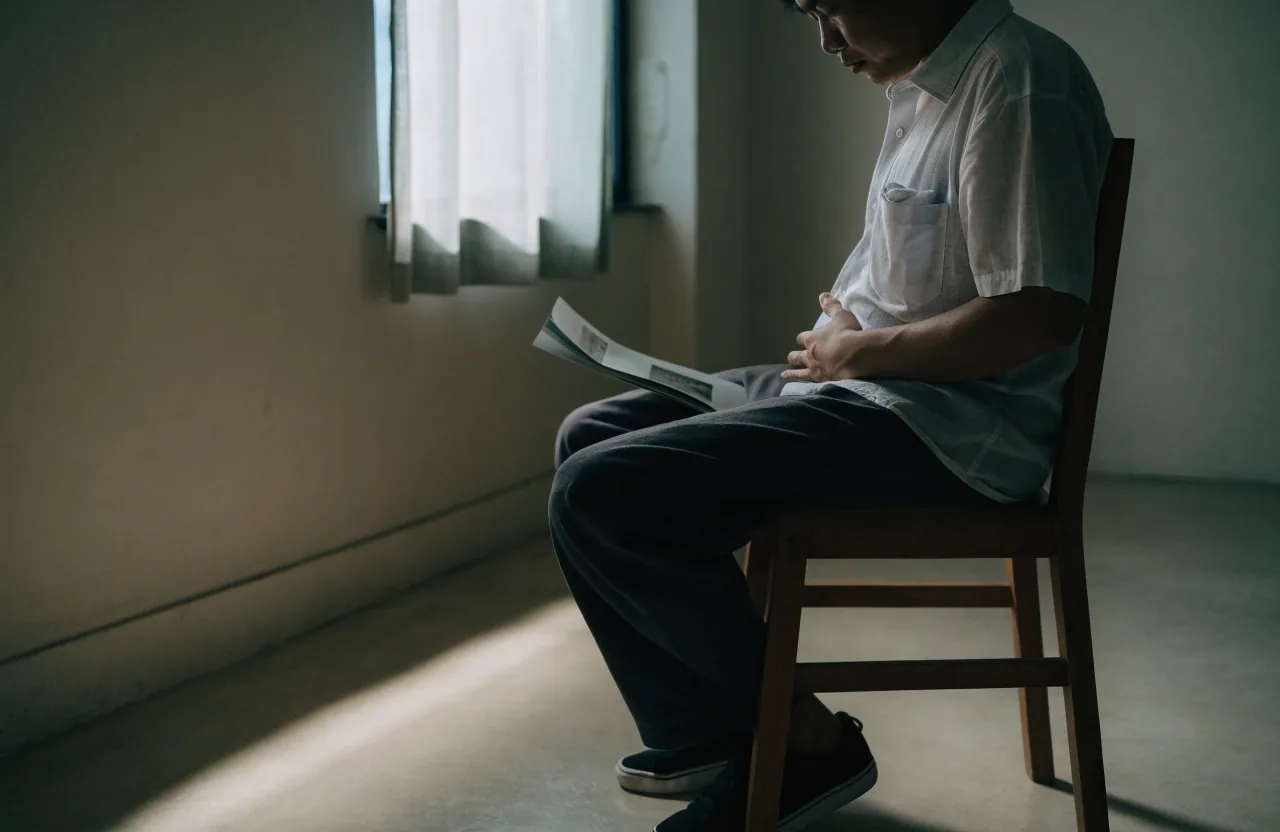
Most of this schedule does not need a gym, a class or a device. The contraction set and the breathing round happen on a chair. The posture break happens at the edge of a desk. Only the movement block wants a little floor space, and a corridor or a courtyard step is enough for a slow mat sequence or a short walk.
Commuting days change the shape of the week, so treat the schedule as movable. If the evening block gets squeezed by traffic, move it to the morning on the days you know the commute runs long.
What you need in the room
- A firm chair with a back you can lean on
- About two metres of floor, or a corridor
- A folded towel under the knees if the floor is hard
- Water within reach, and a quiet two minutes
Common questions about the schedule
Short answers to the parts people ask about before they start. The full list lives on the questions page.
Common QuestionsHow many days a week should the contraction set be done?
Five or six days is plenty for a beginner, with one lighter day built in. The set is short, so the risk is doing too many rushed repetitions rather than too few calm ones.
Can the blocks be done all at once?
They can, and some people prefer one longer evening session. Splitting them across the day is usually easier to keep, because each block stays short enough to fit between other things.
Should breathing come before or after the contraction set?
Either order works. Doing a slow breathing round first helps you notice whether the pelvic floor is gripping, which makes the contractions easier to release fully.
How long before the schedule feels normal?
Most people stop needing reminders somewhere in the second or third week, once each block is tied to a moment that already exists. There is no fixed timeline, and no promised outcome — the aim is a routine that keeps running quietly.
Where to go next
Start the schedule this week with the contraction set and the evening breathing round only. Add the posture break and the movement block once the first two are steady. If you would like to ask about the material on this page before you begin, our editorial team answers questions during working hours.
Ask the editorial team
Monday to Friday, 9:00 AM – 6:00 PM (WIB)
- [email protected]
- Phone
- +62 21 584 7721
- Office
- Jl. Kemang Raya No. 18, Jakarta Selatan, DKI Jakarta 12730, Indonesia