

About our editorial approach
PelvicCore Men's Wellness publishes English-language educational guidance for men in Indonesia on pelvic floor exercises, Kegel routines, posture, breathing, and everyday self-care. This page explains who writes that material, who checks it before it goes live, which sources we lean on, and how we keep the language careful about what a routine can and cannot do.
Anyone can put a routine on a page. The harder part is telling you where the idea came from, what it applies to, and what it leaves out. Below is the working method behind every guide on this site — the people, the reading, the review, and the wording.
Written by people who train and teach this work
Every guide on this site is drafted by a writer with a background in movement teaching or men's fitness instruction, then read line-by-line by a second reviewer before it publishes. We do not name individual contributors with credentials we cannot document, so the site is signed by its editorial desk rather than by a personality.
Drafting
A routine or habit is described in plain steps — starting position, what moves, what stays still, how long to hold, how often to try it. Anything that reads like a promise gets rewritten before it leaves the draft.
Review
A second reader checks the mechanics and the wording — whether the instructions match how the movement is usually taught, and whether the phrasing stays descriptive rather than outcome-focused.
Publishing
The page goes live with a plain statement of what it covers and what it does not. If we cannot support a claim, it is not printed — even when it would read better.
Re-reading later
Guides are revisited on a regular cycle and after any notable change in the published material we rely on. When a passage no longer matches what we would write today, it is rewritten rather than quietly left standing.
See also: our Kegel Basics for Men and Daily Routine Builder, both reviewed under the same method.
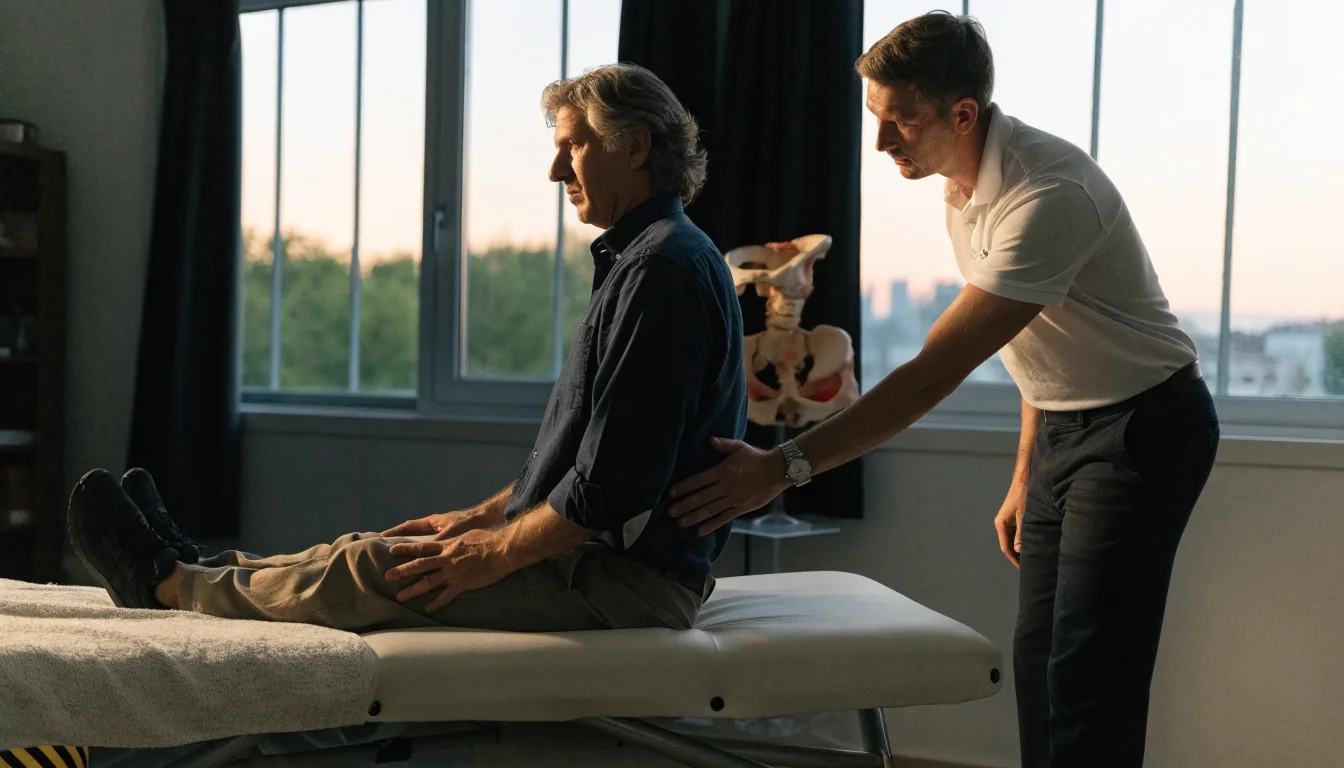
Plain reading, checked twice
We work from general movement teaching and everyday self-care literature that a reader could find and check for themselves — widely available books on training and posture, published guidance on pelvic floor exercise from established health education publishers, and material written for the general public rather than for specialists. Nothing on this site depends on a private study or a number we cannot point you to.
-
Readable at the source
If a passage is drawn from a specific book or published guide, the idea it describes should be findable by a visitor — not locked behind a citation only we can produce.
-
Written for the general reader
We prefer plain-language sources aimed at ordinary readers over material written for a specialist audience, because our own pages are written that way too.
-
No borrowed authority
We do not attach names, seals, or endorsements to a passage to make it feel heavier. The idea has to stand on its own wording.
What we will not print
This site is educational. It describes how a routine is usually taught and what a reader might try at home. It does not promise what any routine will do for a given person, and it does not frame a habit as a fix. Where a reader might expect a stronger statement, we leave the sentence out instead of softening it.
If you have a personal question about whether a movement is suitable for you, that belongs in a conversation with a qualified professional who knows your history. This page, and every guide on the site, is written to help you understand the practice — not to replace that conversation.

A review cycle, not a rewrite for its own sake
Guides on this site are read through again on a regular cycle so the advice stays current with how the practice is commonly taught. When a page is re-read, three things get checked: whether the instructions still match the way the movement is described today, whether the wording has drifted toward anything that reads like a promise, and whether the surrounding links still point to the right place.
If nothing needs to change, nothing changes. We would rather a page look the same for a while than churn for the appearance of activity. When something does change, the page keeps its shape — the steps, the notes, and the see-also references stay where you left them, so a routine you were following does not shift under you.
Questions about the method
The short answers below cover what most readers ask before they trust a page like this one. If yours is not here, write to us and we will add it to the list.
Ask the editorial deskWho actually writes these guides?
The editorial desk drafts and reviews every page together — a writer with movement-teaching experience writes the first pass, and a second reader checks the mechanics and wording before it publishes. We keep the site signed by the desk rather than by a named individual because we cannot document credentials we would need to name someone honestly.
What counts as a source you will use?
General movement and training books, published guidance on pelvic floor exercise written for the general public, and everyday self-care material a visitor could find and read for themselves. We avoid sources that only exist behind a paywall or that would require us to present a number we cannot show you.
How often is a page reviewed again?
On a regular cycle, and after any notable change to the published material we rely on. A re-read can end with no edits at all — if the page still says what we would write today, we leave it alone. When something does change, the surrounding steps and links stay in place so nothing shifts under a reader mid-routine.
Why does the site not promise an outcome?
Because a routine is a practice, not a result — and what a person gets from it depends on things we cannot see from here. Our job is to describe the practice clearly so a reader can decide what to try. Anything beyond that belongs with a professional who knows the reader's own history.
How do I flag something that reads wrong?
Write to the editorial desk with the page and the passage you are looking at. Reports from readers are part of the review cycle — a note that a step is unclear or a line sounds stronger than it should is exactly the kind of feedback that gets a page re-read sooner.
Where to continue reading
The guides below are the pages most visitors move to after this one. Each follows the same writing and review method described above.
Tell us what you want explained better
If a guide on this site left a step unclear, or you want to ask how a passage was written, write to the editorial desk. Reader notes are part of the review cycle and often the reason a page gets read through again sooner than planned.
- Address
- Jl. Kemang Raya No. 18, Jakarta Selatan, DKI Jakarta 12730, Indonesia
- Phone
- +62 21 584 7721
- [email protected]
- Office hours
- Monday to Friday, 9:00 AM – 6:00 PM (WIB)
PelvicCore Men's Wellness publishes educational material only. Nothing on this site is a substitute for advice from a qualified professional who knows your personal history.